

The Revenue Architecture Map
A visual guide to the structural layers that determine whether go-to-market compounds or collapses.

Most GTM diagnoses start in the wrong place.
Low pipeline gets blamed on outreach volume. Poor close rates get blamed on the sales team. Content that does not convert gets blamed on the creative. Each fix targets a symptom while the structural cause stays intact.
Revenue systems do not break at the surface. They break at the architectural layer underneath.
This is a map of that architecture.
THE REVENUE ARCHITECTURE MAP
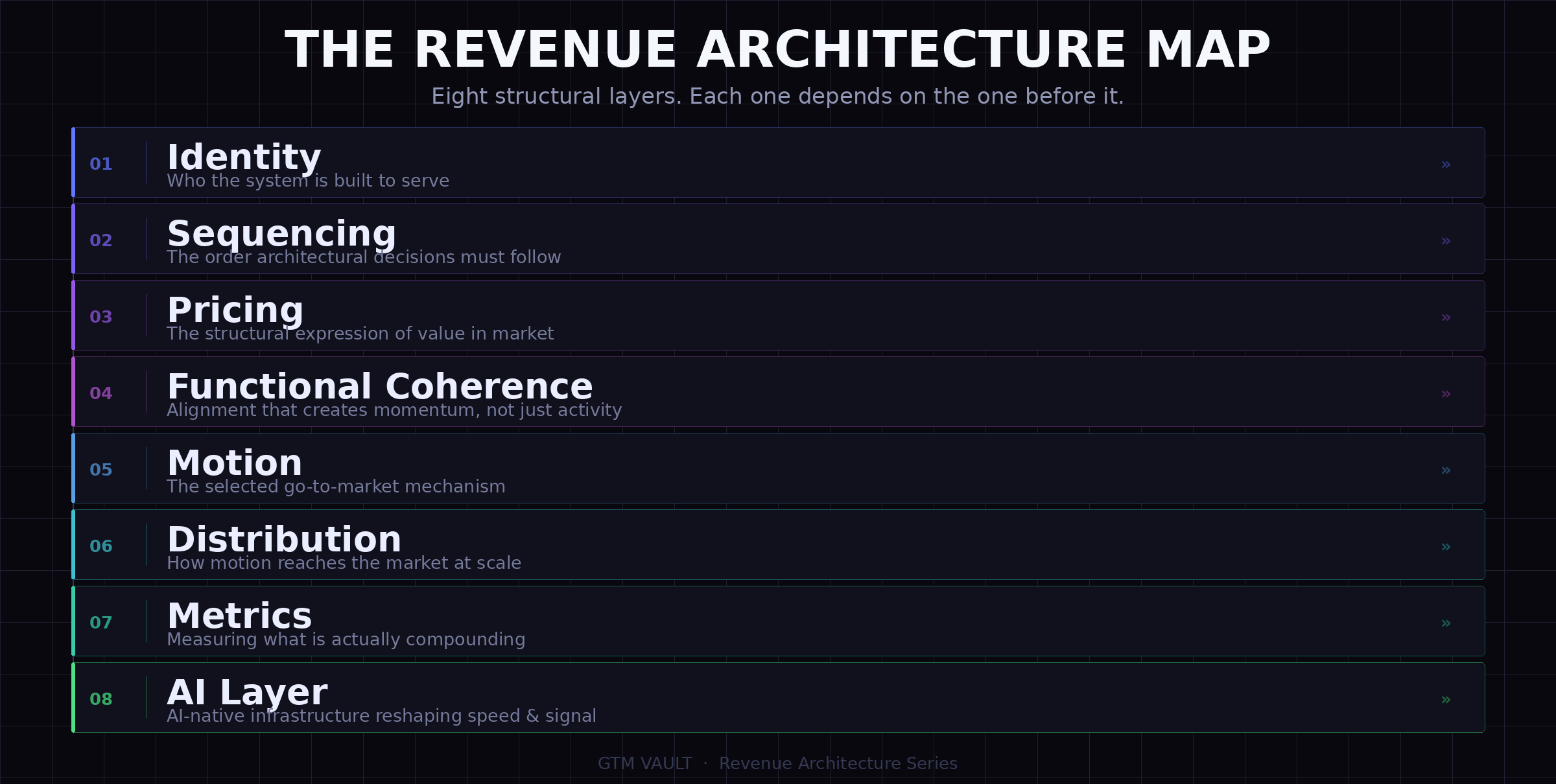
Eight structural layers. Each one depends on the one before it. Optimize layer five before layer one is solved and you are building on an unstable foundation.
This is why GTM motions that appear well-resourced still fail to compound.
THE LAYERS
Layer 01: Identity
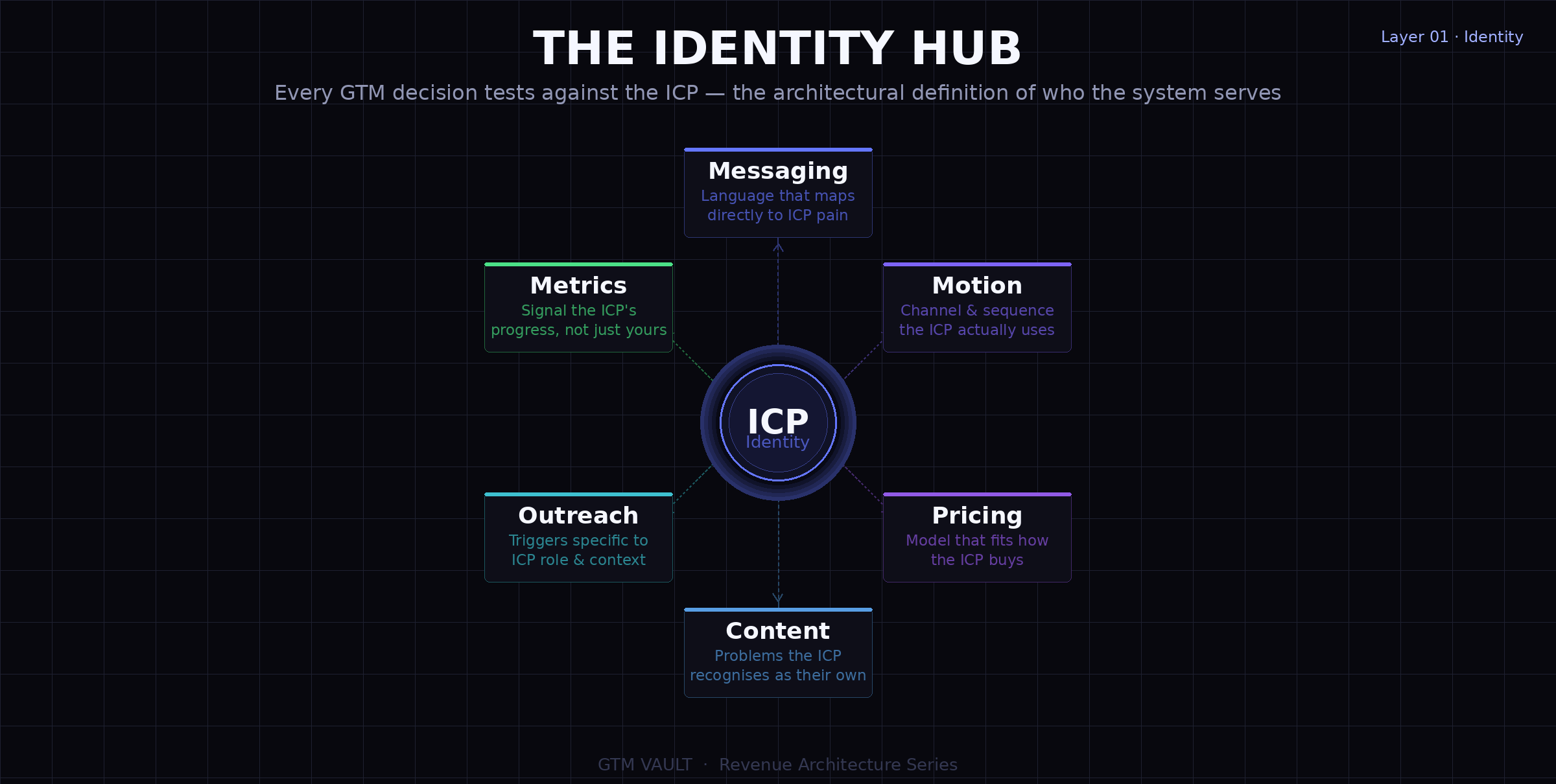
Every GTM decision tests against the ICP. Not as a targeting filter applied to a list. As the architectural definition of who the system is built to serve.
An undefined ICP does not produce broad reach. It produces noise at every subsequent layer.
Read: Identity Without Architecture Is Structural Drift
Layer 02: Sequencing
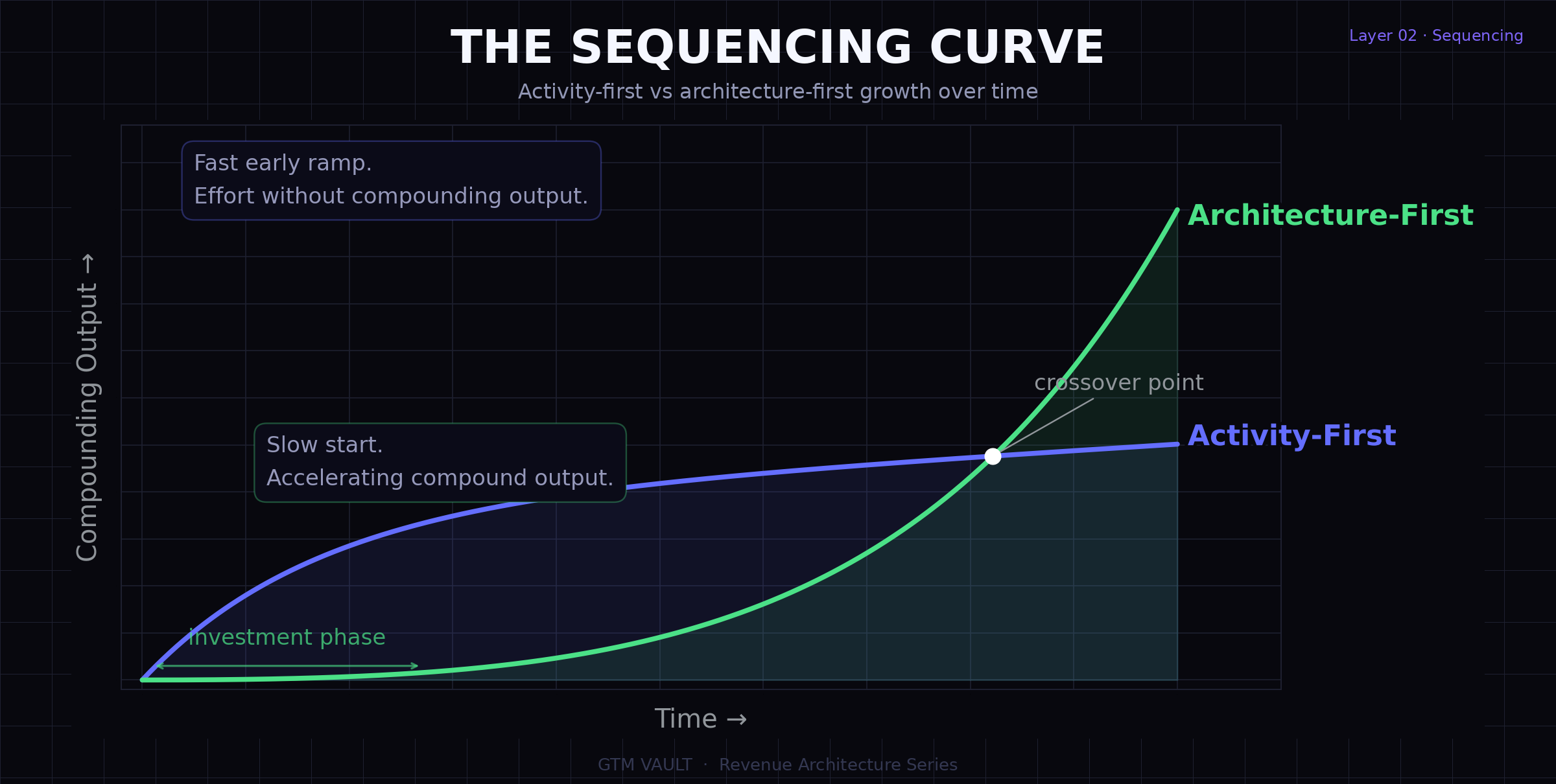
Once identity is defined, the order of architectural decisions matters. Organizations that attempt to scale motion before identity is locked, or distribution before motion is proven, accelerate the wrong architecture.
The result is not failure. It is effort without compounding output.
Read: Premature Scaling Is Structural Failure
Layer 03: Pricing
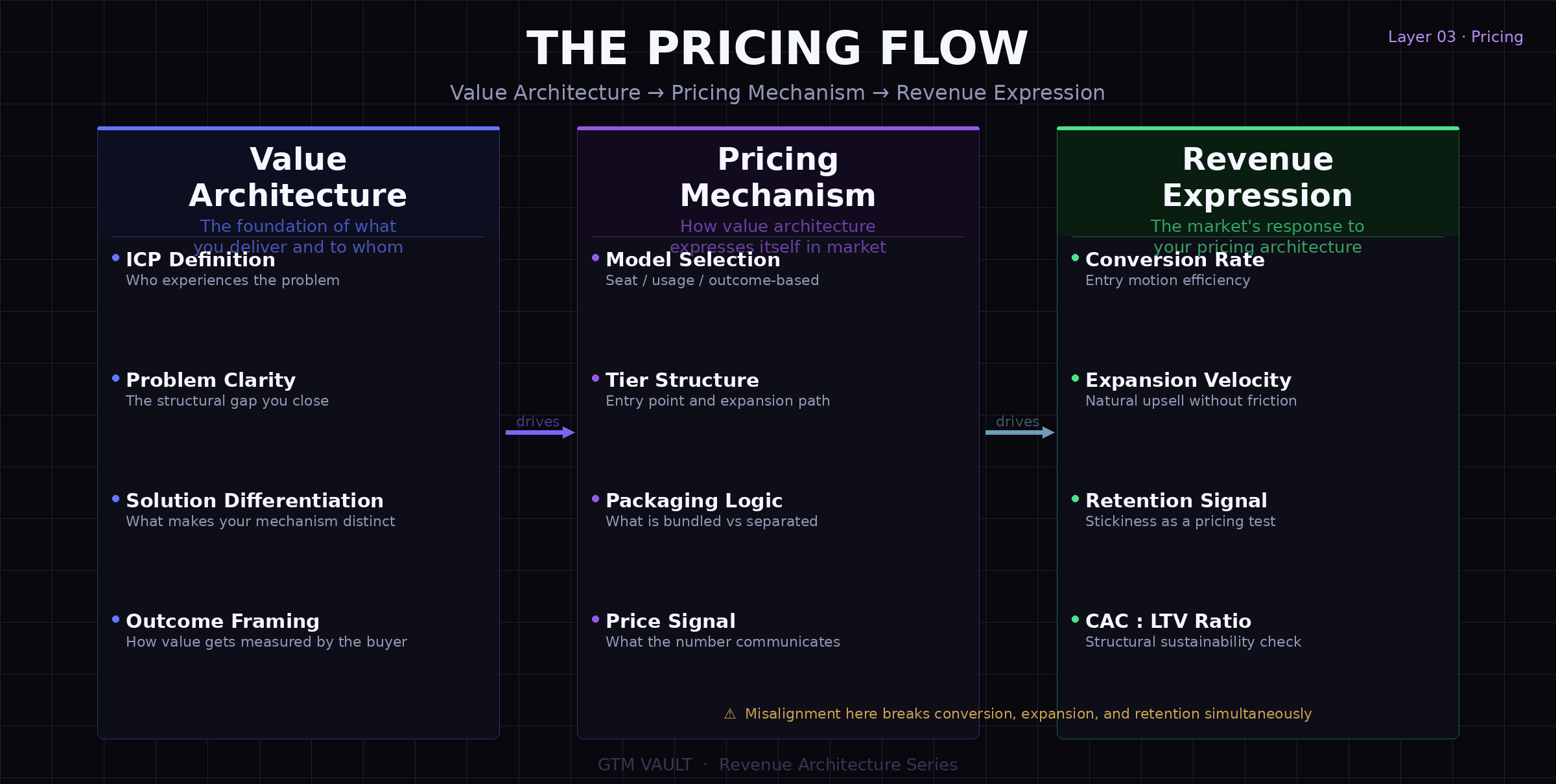
Pricing is not a revenue lever adjusted in response to competitive pressure. It is the mechanism through which your value architecture expresses itself in the market.
A misaligned pricing layer breaks conversion, expansion, and retention simultaneously, often without a visible single point of failure.
Read: Pricing Is the Structural Expression of Value Expansion
Layer 04: Functional Coherence
Marketing, sales, and customer success each have local metrics. When those metrics pull in different directions, the system produces activity without momentum.
Coherence is not a culture initiative. It is a structural requirement.
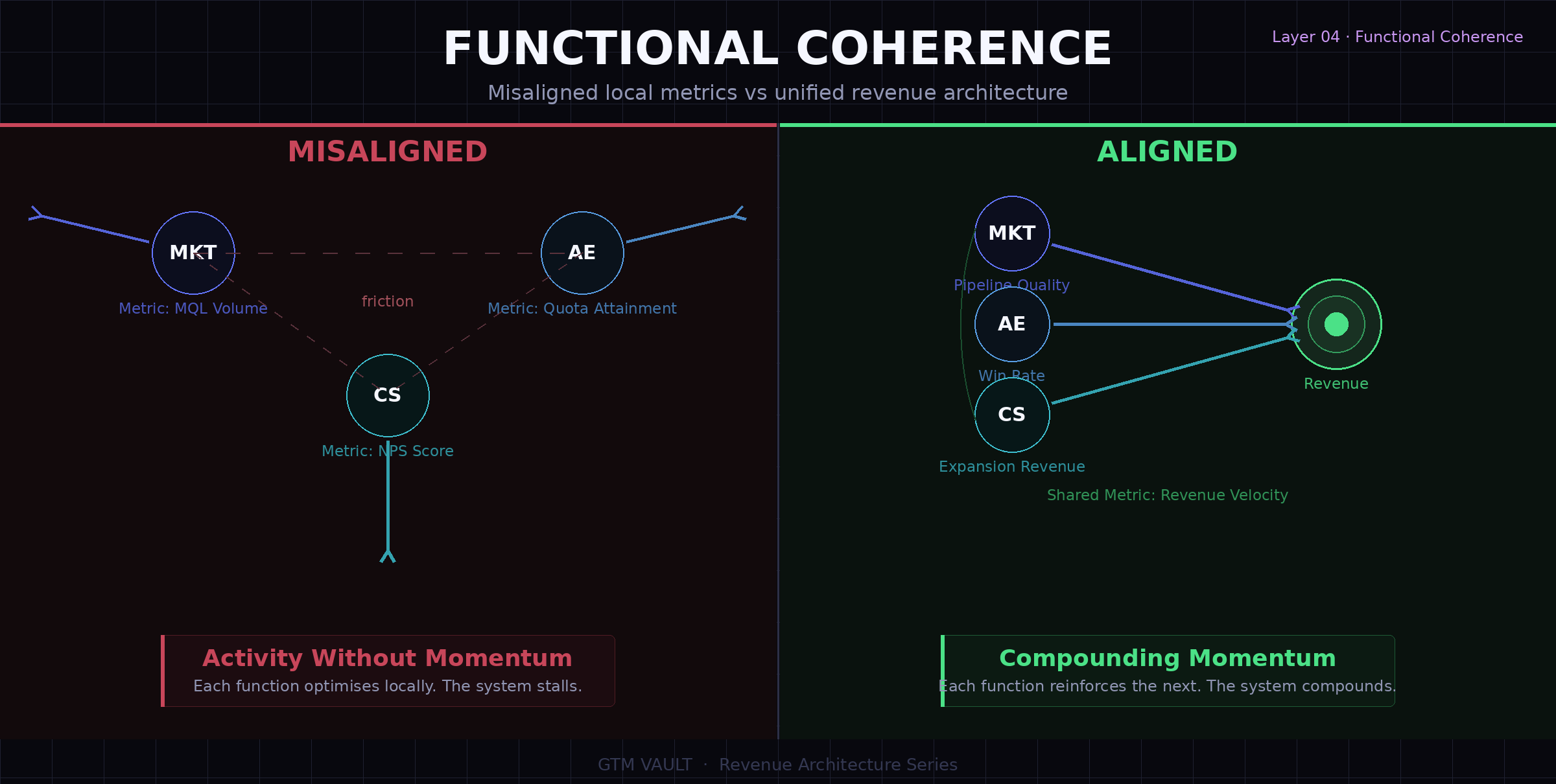
Read: Functional Activity Without Coherence Is Structural Dilution
Layer 05: Motion
With identity defined and the system sequenced correctly, a motion is selected. Inbound, outbound, PLG, or partner. Each requires a different structural foundation.
Selecting the wrong motion for the current stage is a sequencing violation that compounds over time.
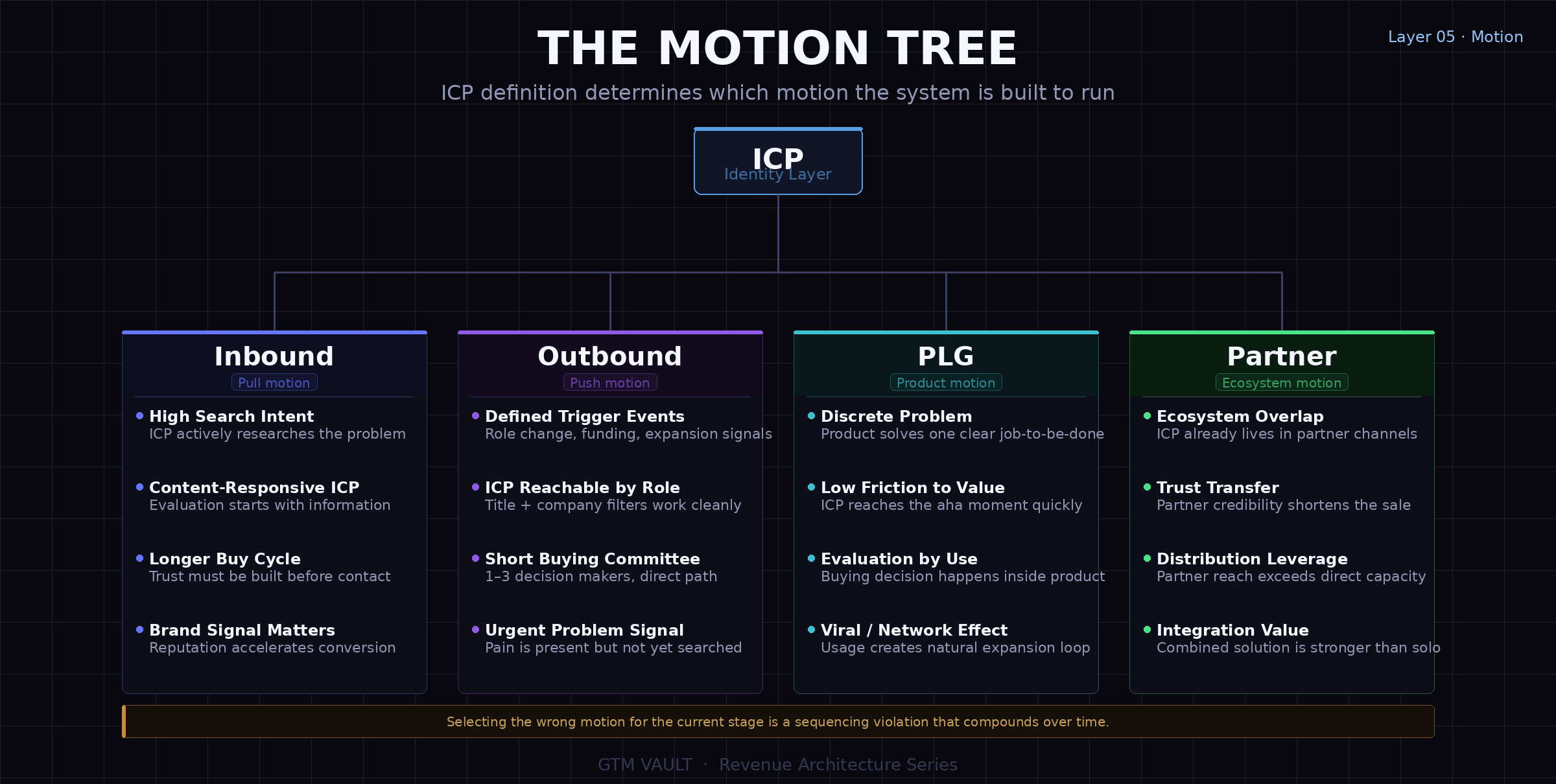
Read: Motion Without System Is Structural Noise
Layer 06: Distribution
How motion reaches the market at scale, what channel architecture actually means, what breaks when distribution is treated as a tactics problem rather than a structural one. Foundational Law 06 is in development.
Layer 07: Metrics
What it means to measure compounding versus measuring activity, why local metrics create the illusion of progress, what the right signal looks like. Foundational Law 07 is in development.
Layer 08: AI Layer
What AI-native infrastructure actually changes about the stack, why this is a structural layer and not a feature, what it reshapes at the signal and speed level. Foundational Law 08 is in development.
THE FULL SYSTEM
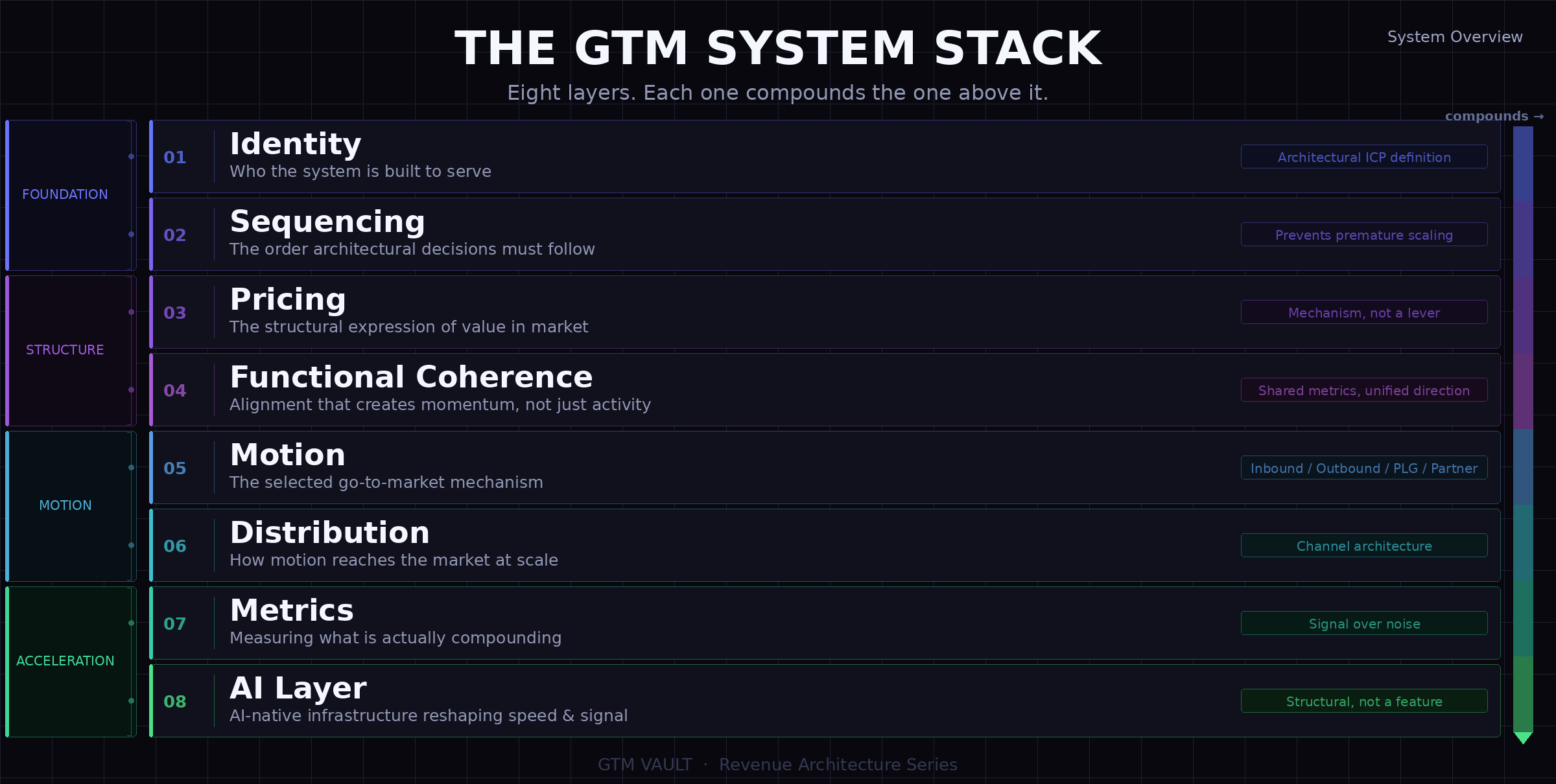
Revenue compounds when each layer reinforces the next. When it does not compound, the map tells you which layer to fix first.
HOW TO USE THIS
This map is the navigational reference for GTM Vault.
If you are diagnosing a GTM problem, start by identifying which layer is the actual point of failure. Most diagnoses skip to layer five or six when the real break is at layer one or two.
If you are building a GTM system from scratch, work through the layers in order. Each one must be architecturally sound before the next one can produce compounding output.
The Foundational Laws explore each layer in depth. They are written to be read in sequence.
The Blueprint sessions install this architecture inside real operating companies. If you want to work through the map directly against your system, that is where it happens.
How the Blueprint process works
Upgrade to Annual Pro. Blueprint access is included during the Founding 100 window.
Complete the Blueprint Intake Form. Capture your ICP, motion, constraints, and the outcome you want installed.
Receive your private booking link. Schedule your session.
Run the Blueprint Session. We identify the structural constraint and define your 90-day architecture.
Leave with structured output. A documented Blueprint summary with ICP logic, motion decisions, and a committed 90-day roadmap.
Blueprint access is reserved for the Founding 100 cohort.
The map does not change. The motion that sits on top of it does.