

The New B2B GTM Playbook
How modern revenue teams design demand, read intent, and move beyond funnels

The B2B GTM playbook did not slowly evolve.
It broke.
Most teams did not notice at first. They just felt busier.
More campaigns. More emails. More meetings. Less pipeline to show for it.
This did not happen because teams forgot how to execute.
It happened because buyers changed how they buy at the same time technology reshaped how GTM systems operate.
Most companies are still running the old playbook.
The best teams have already moved on.
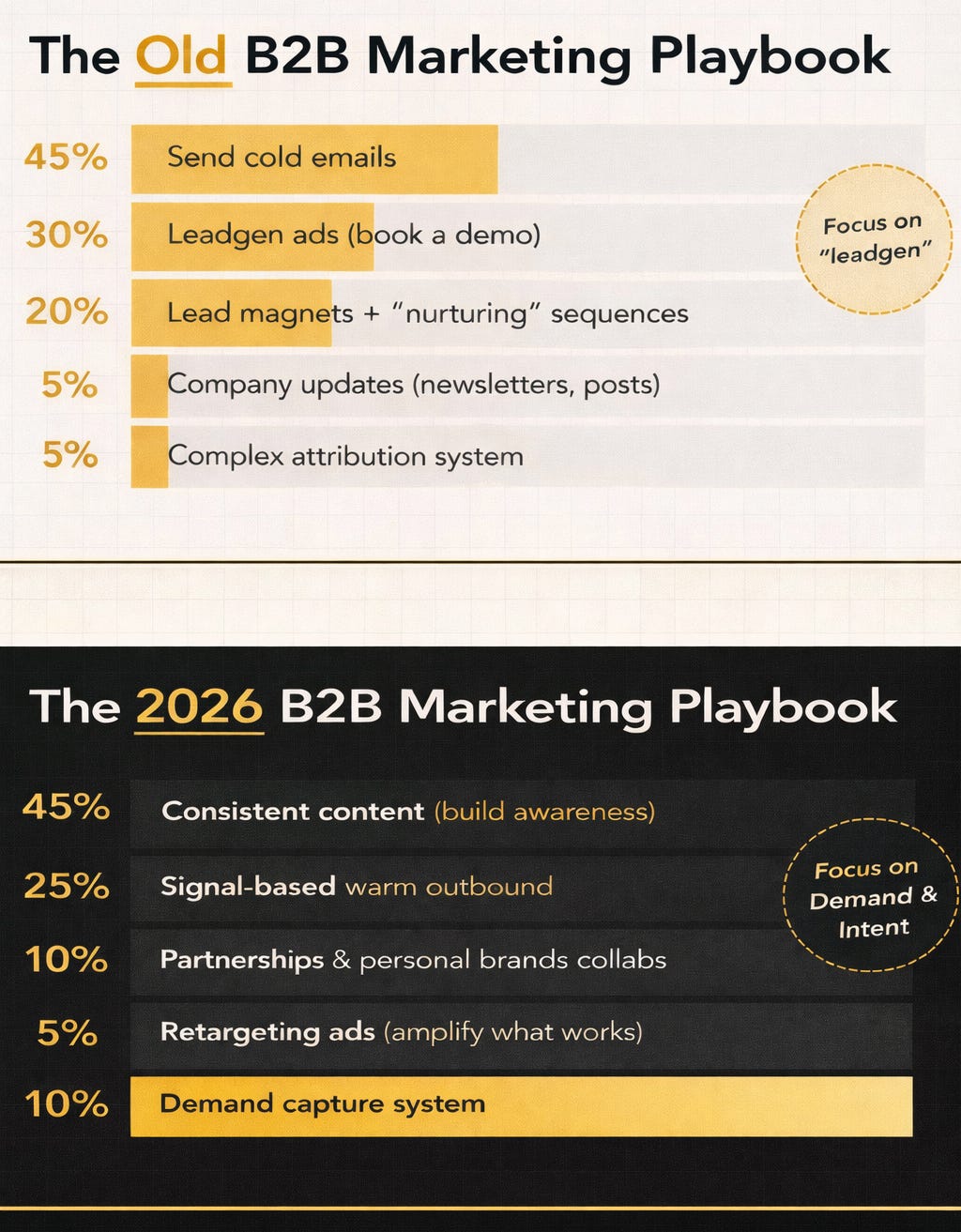
The old B2B GTM playbook
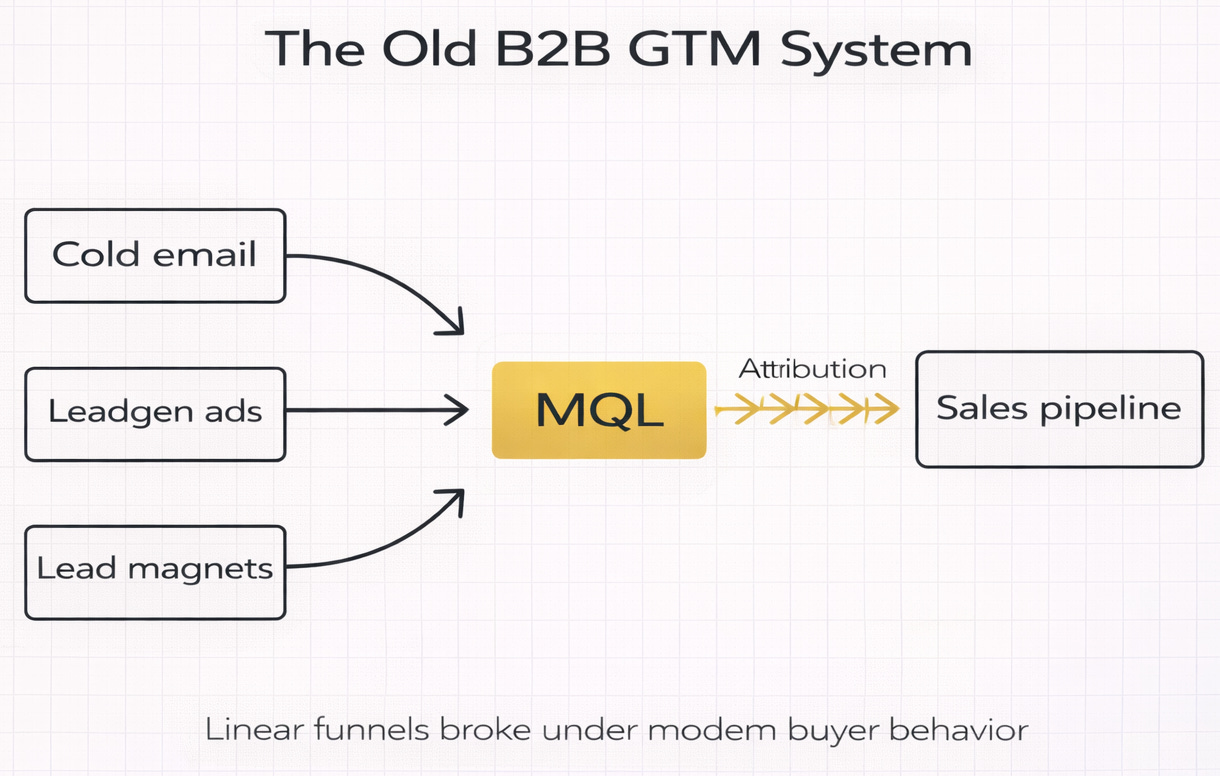
The old model was built around lead generation and attribution.
Growth depended on pushing prospects into demos as early as possible. Cold outbound and leadgen ads drove volume. Lead magnets and long nurture sequences attempted to warm buyers who were not actually ready. Content existed, but mostly as filler between campaigns.
To justify the motion, teams layered on complex attribution models to explain where leads came from and who deserved credit.
The system was optimized for volume and reporting, not buyer readiness.
When results slowed, teams responded with more activity. More emails. More spend. More dashboards. The system itself could not read intent, so humans were forced to compensate.
This is why so many GTM teams feel like they are doing more work every quarter just to stay flat.
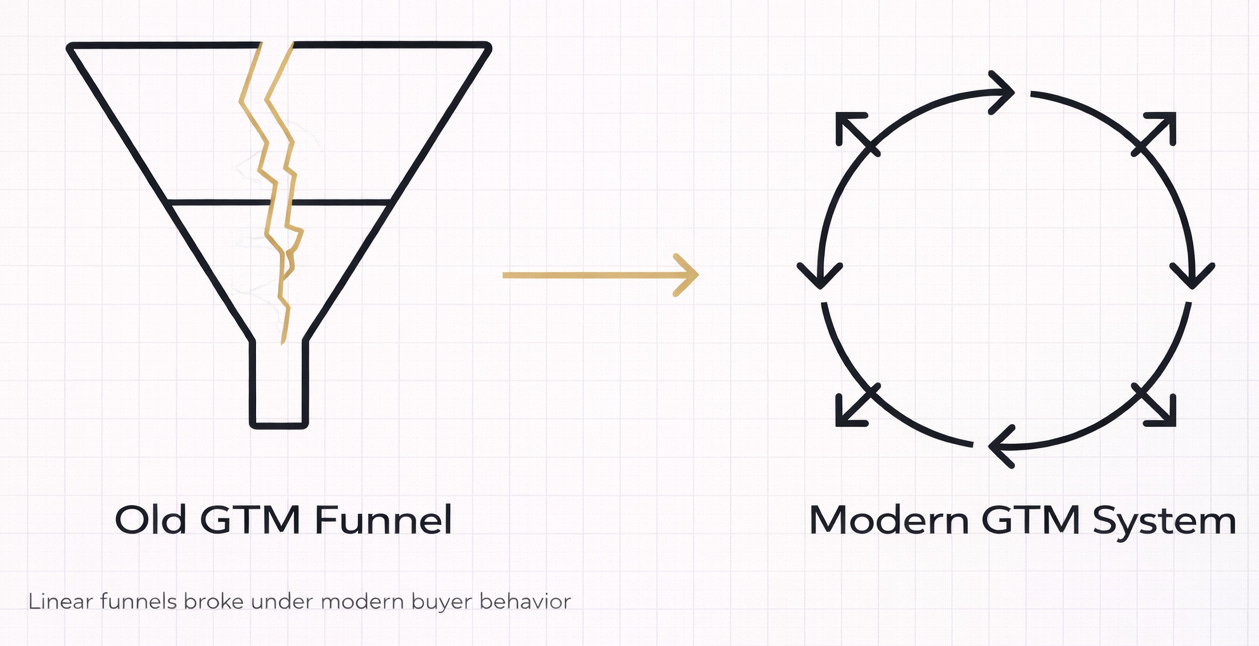
The new B2B GTM playbook
The new model is structurally different.
Modern teams start by investing heavily in consistent content that shapes how buyers understand the problem long before a sales conversation happens. Content is no longer a supporting tactic. It is the engine of demand creation.
Once demand exists, outbound becomes signal-based and selective. Teams do not email everyone. They prioritize accounts already showing intent through engagement, behavior, and market signals. Outreach is contextual and timed to buyer readiness.
Distribution and trust are accelerated through partnerships and personal brands. Instead of relying only on owned channels, teams extend reach through voices buyers already follow and respect.
Paid spend shifts away from broad lead generation and toward retargeting that amplifies what is already working. Advertising reinforces demand instead of trying to manufacture it from scratch.
Finally, demand capture systems allow in-market buyers to raise their hand naturally, without forcing them into premature demos or gated funnels.
The result is fewer campaigns, fewer emails, and more predictable outcomes.
This is not a tactical shift
This is not a change in channels or tools.
It is a change in system design.
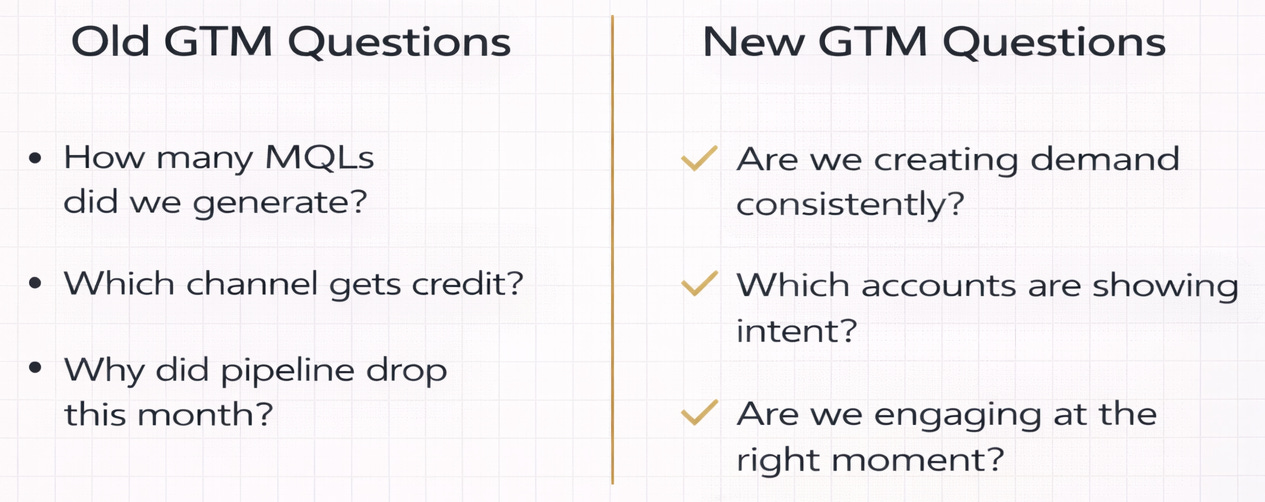
The old model asked:
How many leads did we generate?
Which channel deserves credit?
The new model asks:
Are we creating demand consistently?
Do we know which accounts are ready right now?
Is effort applied at the moment it actually matters?
This is why some teams feel constantly behind, while others operate calmer systems and grow more predictably.
What actually changed
Buyers moved to self-serve journeys, social platforms, and peer-driven validation.
At the same time, AI-native tools made it possible to detect intent, coordinate action, and align marketing, sales, and customer success around the same signals.
What did not change are the fundamentals.
Teams still need a clear ICP, strong positioning, disciplined execution, and clean data. What changed is how these elements are connected and activated inside the system.
The teams still running the old playbook are arguing about attribution.
The teams running the new GTM playbook are building revenue systems that respond to buyers, not dashboards.
That is the difference between chasing growth and designing it.
Modern GTM is not about generating demand. It’s about recognizing it before your competitors do.