

GTM Is Leadership Architecture
A Six Week Fellowship That Reframed How I Design Go To Market


Most GTM playbooks focus on tactics.
Channels.
Messaging.
Funnels.
The ones that last focus on something deeper.
Perception.
My six week fellowship with Terry Matthews changed how I see go to market.
Not as execution.
As leadership architecture.
Founder of Mitel.
Founder of Newbridge Networks.
Chairman of Wesley Clover International.
Across five decades, his platform has backed 100+ companies, produced dozens of exits, created multiple unicorn scale outcomes, and even taken public companies private again to continue compounding long term.
But the GTM lessons did not come from boardrooms.
They came from kitchens.
From docks.
From long meals and small, repeatable decisions.
I was not there to pitch.
Not there to sell.
Not there to network.
I was there to observe how someone who consistently creates markets actually operates.
What I found was not capital strategy.
It was GTM leadership architecture.
GTM Principle 1: Markets Buy Belief Before They Buy Product
This is not philosophy. It is operating design.
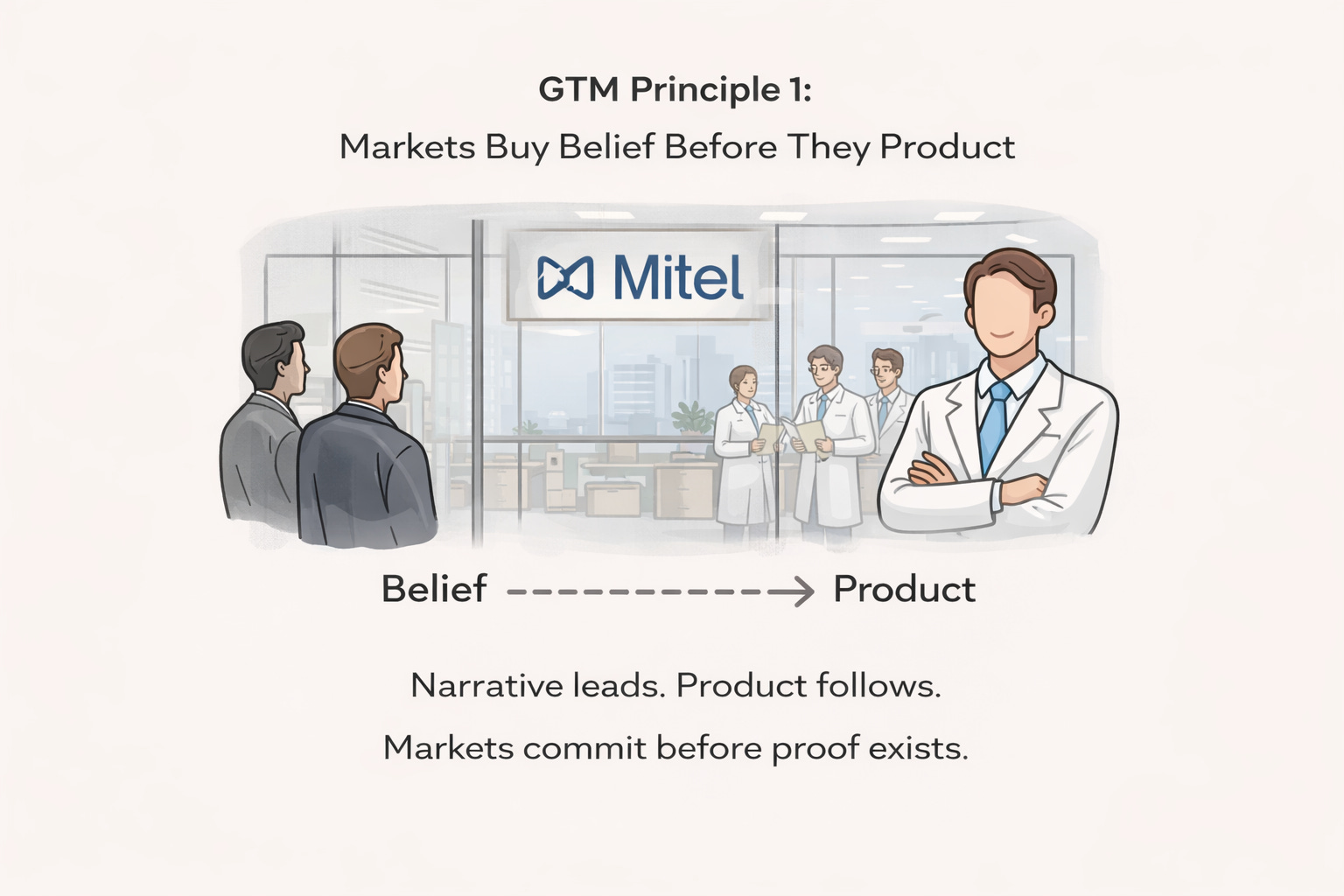
Before Mitel existed as a real company, Terry was a salesperson.
In the earliest days, he sold features that had not been built yet.
Not dishonestly.
Decisively.
He understood something most founders learn too late:
Markets do not buy what exists.
They buy what they believe is inevitable.
One day, he invited prospects to his office.
At the entrance, the Mitel logo was placed prominently, giving the impression the company occupied the entire building.
Inside, employees and others in the space wore white lab coats.
When prospects asked what they were working on, the answers were calm, confident, and slightly opaque.
Important systems.
Complex work.
Serious problems.
The product would catch up.
And it did.
This is what modern founders call “selling the roadmap.” Terry was doing it decades earlier.
This was not deception.
It was narrative leadership.
Great GTM is not pretending to be bigger than reality.
It is pulling reality forward through conviction.
GTM Principle 2: Recognition Is a Retention Strategy, Not Culture Theater
This is not philosophy. It is operating design.
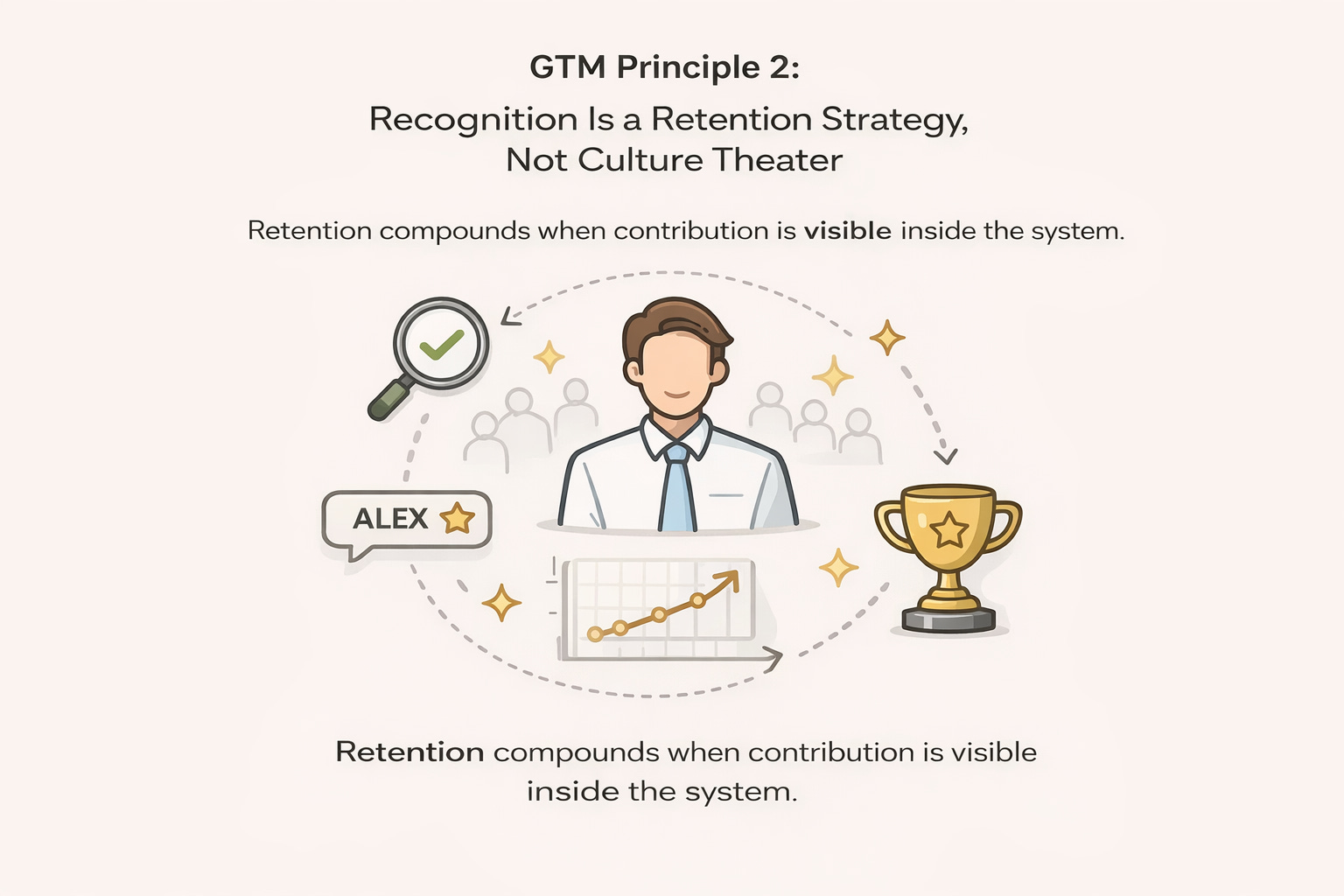
Terry said something early that reframed how I think about teams:
People do not leave because of money.
They leave because they stop feeling seen.
Recognition, in his system, is not praise.
It is precision.
He noticed effort.
He remembered names.
He acknowledged progress in motion.
Not performatively.
Operationally.
In GTM terms, this is retention leverage.
People stay where momentum is visible.
Where contribution is acknowledged.
Where their work clearly moves the system.
I adopted this as an operating rule in every company since.
Not as values.
As GTM infrastructure.
GTM Principle 3: Ownership Aligns Behavior Faster Than Incentives
This is not philosophy. It is operating design.
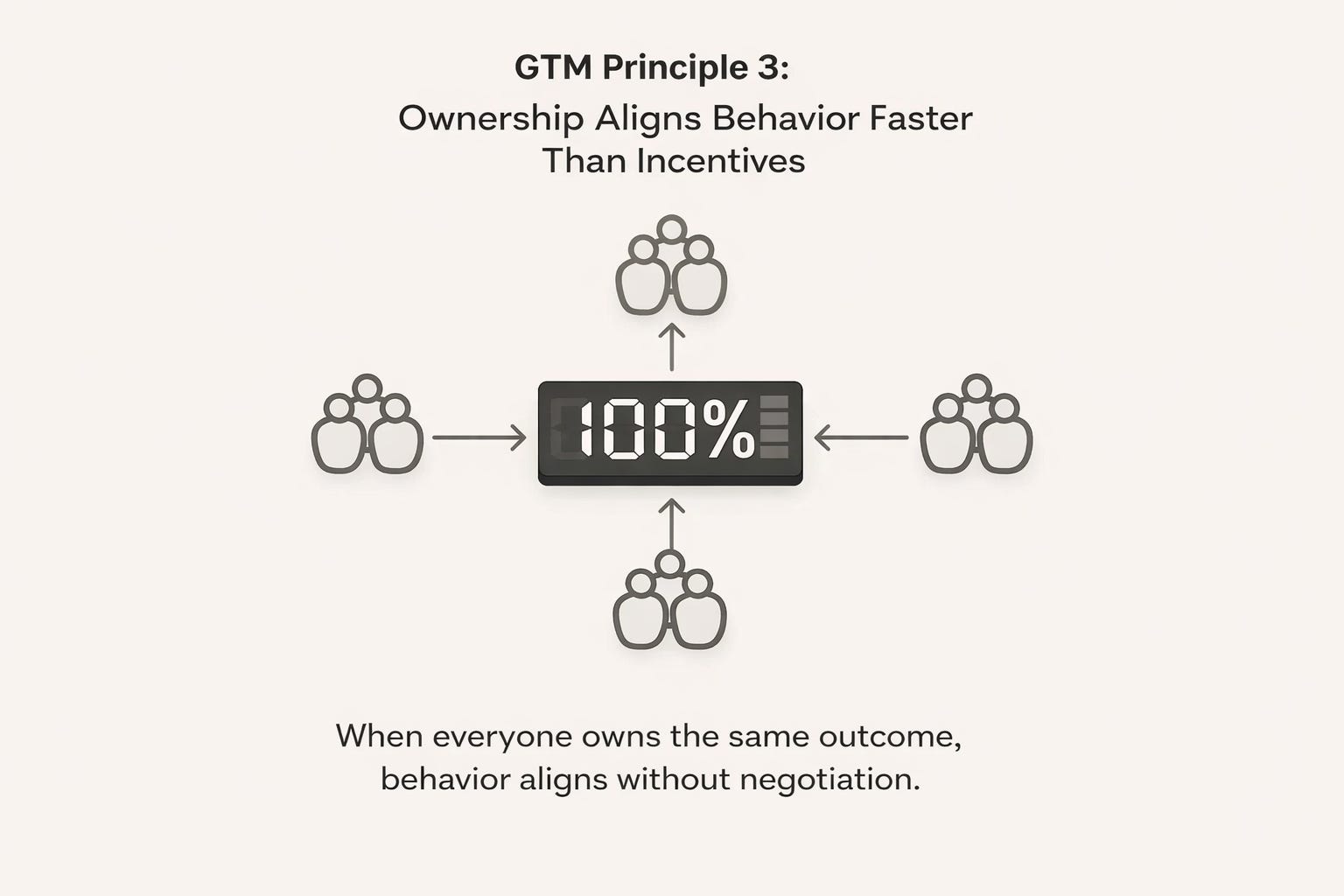
Ownership was never positioned as compensation.
It was positioned as responsibility.
When people own outcomes, behavior changes immediately.
They stop optimizing tasks.
They start optimizing impact.
Ownership creates gravity.
Decisions slow down where they should.
Quality rises.
Blame disappears.
This is GTM alignment at its core.
When sales, product, and delivery share ownership, handoffs disappear.
The system tightens.
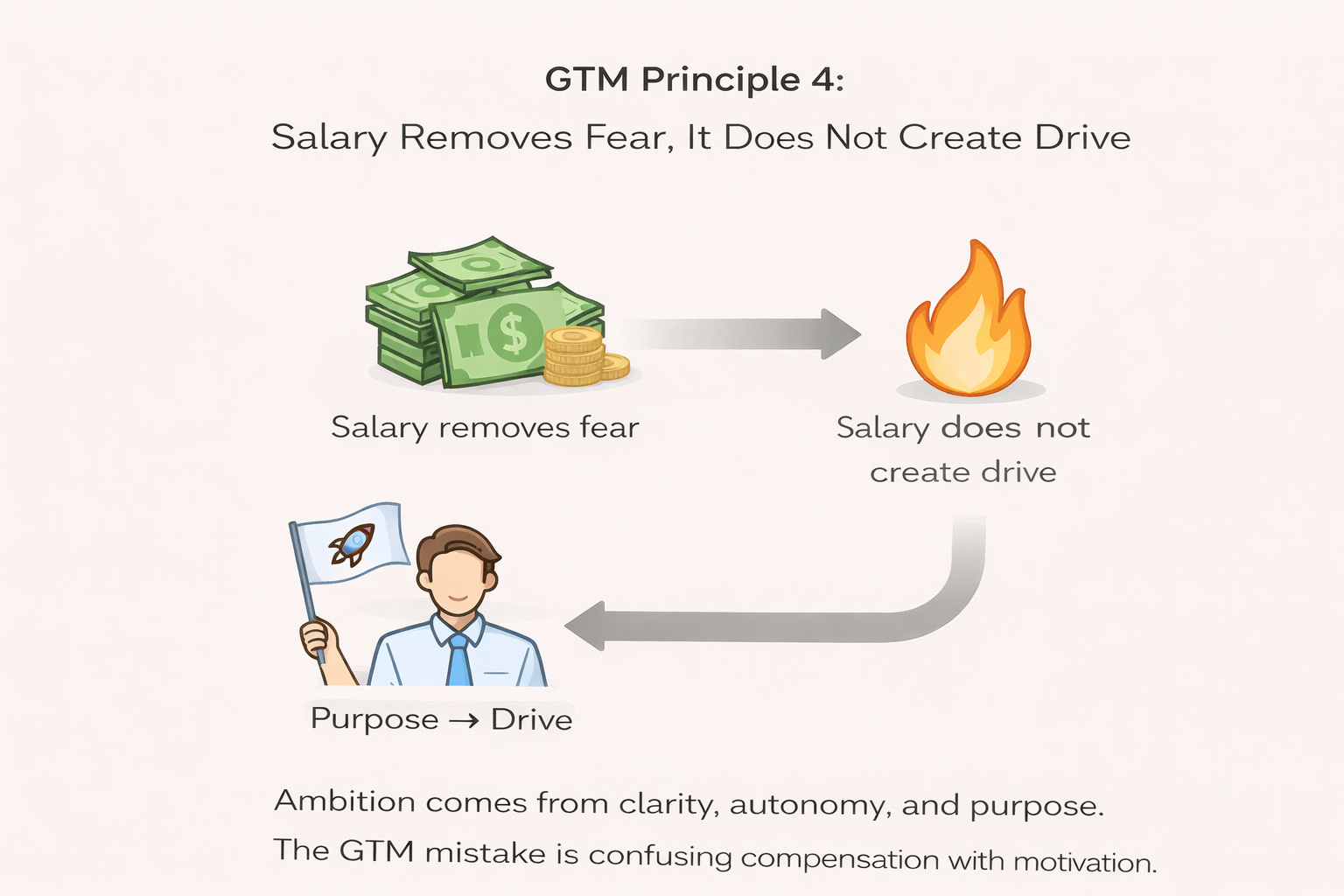
GTM Principle 4: Salary Removes Fear, It Does Not Create Drive
This is not philosophy. It is operating design.
This one surprised me.
Salary is hygiene.
Not fuel.
Money removes anxiety.
It does not create ambition.
Ambition comes from clarity, autonomy, and purpose.
From knowing what matters and being trusted to move it forward.
The GTM mistake is not paying people well.
It is confusing compensation with motivation.
High performing GTM teams are not overpaid.
They are aligned.
GTM Principle 5: Mentorship and Market Learning Require Proximity
This is not philosophy. It is operating design.

There were no lectures.
No frameworks.
No slides.
Terry cooked.
He hosted.
He listened.
At one point, he invited our cohort of Turkish founders to his summer house in the Thousand Islands.
No conference table.
No agenda.
He grilled steaks himself.
Not as symbolism.
As operating culture.
GTM leadership does not happen in meetings.
It happens where trust compounds faster than authority ever could.
GTM Principle 6: Power Does Not Need to Signal
This is not philosophy. It is operating design.
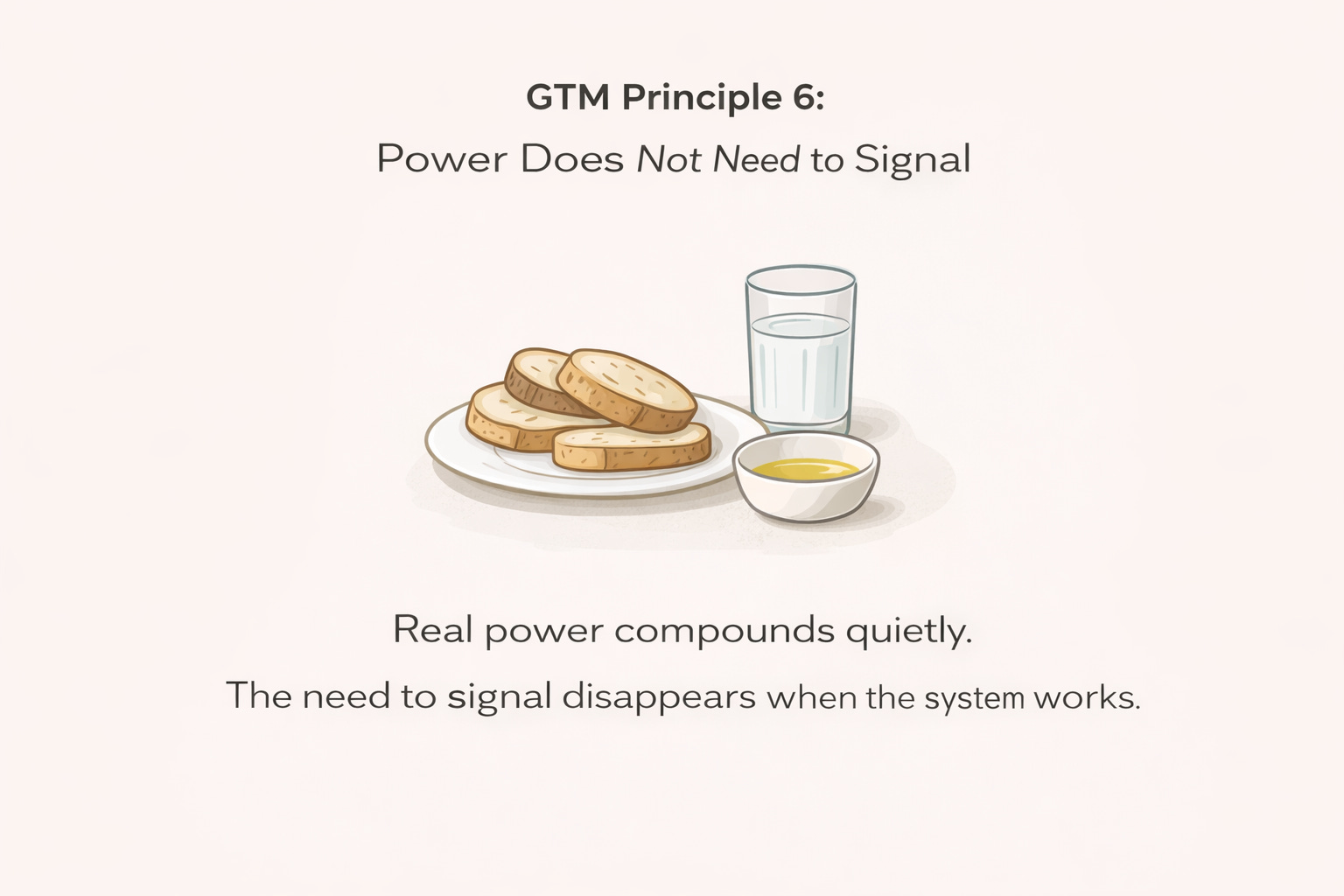
Despite extraordinary success, Terry lived simply.
Modest meals.
Bread and olive oil.
No indulgence theater.
Enjoyment came from people, conversation, and building.
This explained his platform investing model.
True power does not rush exits.
It compounds quietly.
That is how Wesley Clover scaled companies, took public ones private again, and built long term value beyond market cycles.
GTM systems built for compounding always outlast those built to impress.
Wesley Clover works because it treats go to market as a repeatable system, not a one time launch event.
The GTM Playbook That Stayed With Me
I did not leave with tactics.
I left with a clearer GTM compass.
What Terry showed me is that GTM is not about convincing markets.
It is about designing systems where belief, behavior, and alignment compound on their own.
These principles still guide how I build and advise:
Narrative pulls markets forward
Recognition outperforms compensation
Ownership outperforms incentives
Alignment outperforms activity
Proximity outperforms authority
Systems outscale effort
GTM is the discipline of designing belief, behavior, and alignment to compound before product, before scale, and before proof.
GTM is not a growth function.
It is leadership architecture in motion.