

Category Leadership Is Built. Not Launched.
How the Best Companies Design Markets, Not Products

Most founders think categories are discovered.
Clay didn’t discover a category. They manufactured one.
They didn’t raise $100M at a $3.1B valuation because growth worked.
They won because they reprogrammed how an industry thinks about go-to-market.
Clay didn’t scale software. They institutionalized a profession.
And once you see that, category creation becomes architectural, not mystical.
Category Creation Is a Language Problem First
Markets don’t organize around products.
They organize around words.
Clay didn’t ship features and hope for positioning.
They introduced a new identity: GTM Engineer.
Not branding.
A new mental model.
It reorganized:
How companies hire
Who owns budgets
What success looks like
Which tools matter
Once the language landed, behavior followed.
Language always precedes leverage.
Infrastructure Beats Features
Most companies optimistically ship software. Clay methodically shipped infrastructure.
They didn’t build a tool. They built an operating system around a profession.
What this looked like in practice
Clay didn’t “build community.”
They engineered a system:
A public curriculum with named roles and pathways
Apprenticeship loops with live deployment
A job gravity engine that rewired hiring behavior
A content engine that trained the market in public
Partner distribution that monetized belief, not features
This is what market infrastructure actually looks like.
Not a product.
A machine.
Before Clay, We Ran This Playbook at CreatorDen
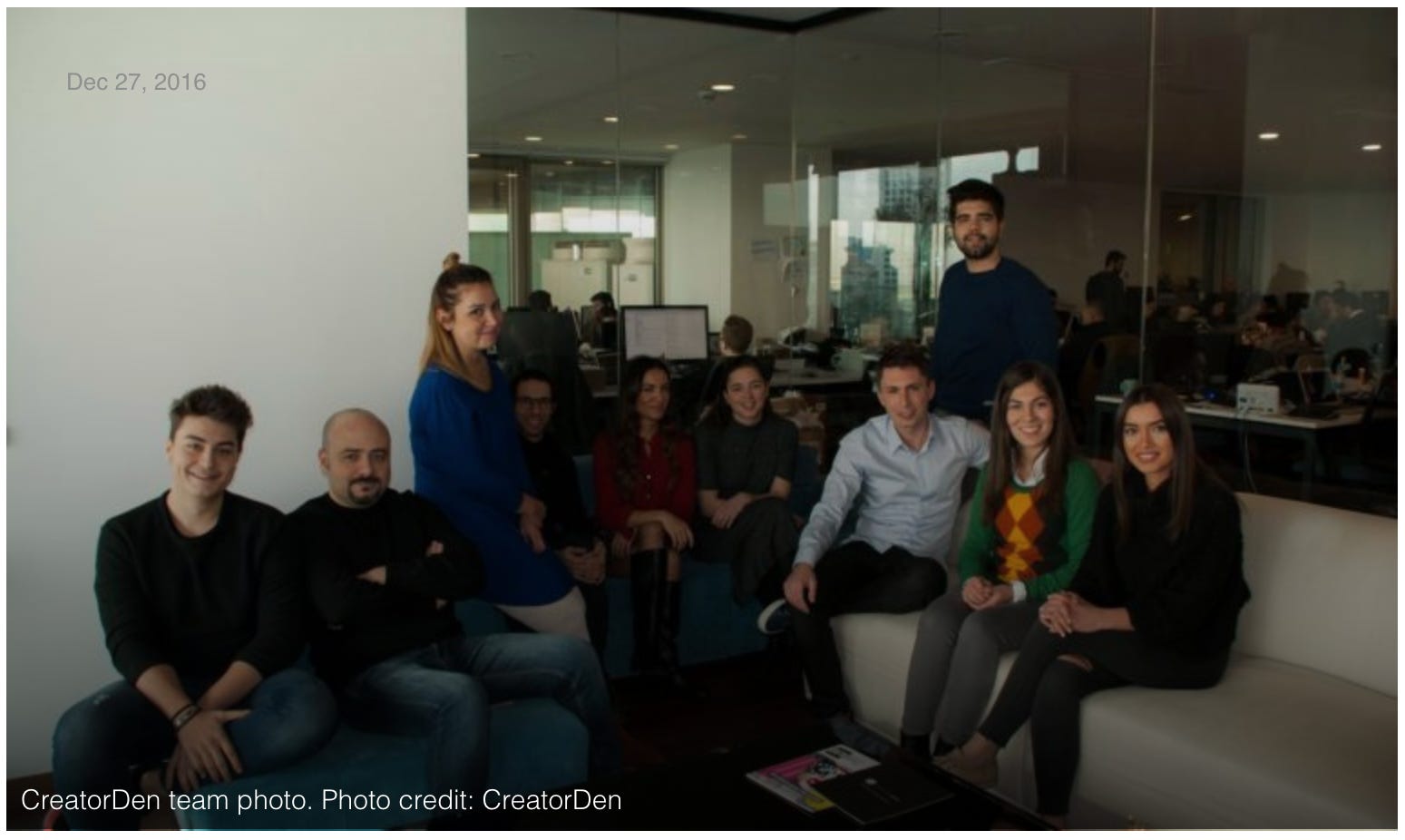
A decade earlier, in Turkey, we ran the same experiment from zero.
Not with a role.
With an entire market.
In 2014, influencer marketing didn’t exist locally.
No buyers.
No spending behavior.
No trust layer.
No industry language.
So we didn’t launch a startup.
We designed infrastructure.
CreatorDen wasn’t a software company.
It was the operating layer of a future industry.
Not a directory.
Not a marketplace.
Not a dashboard.
An execution system.
Onboarding.
Orchestration.
Payment rails.
Reporting.
Trust.
We didn’t sell impressions.
We sold reliability in a chaotic market.
We Didn’t Just Build Software. We Built Schools.
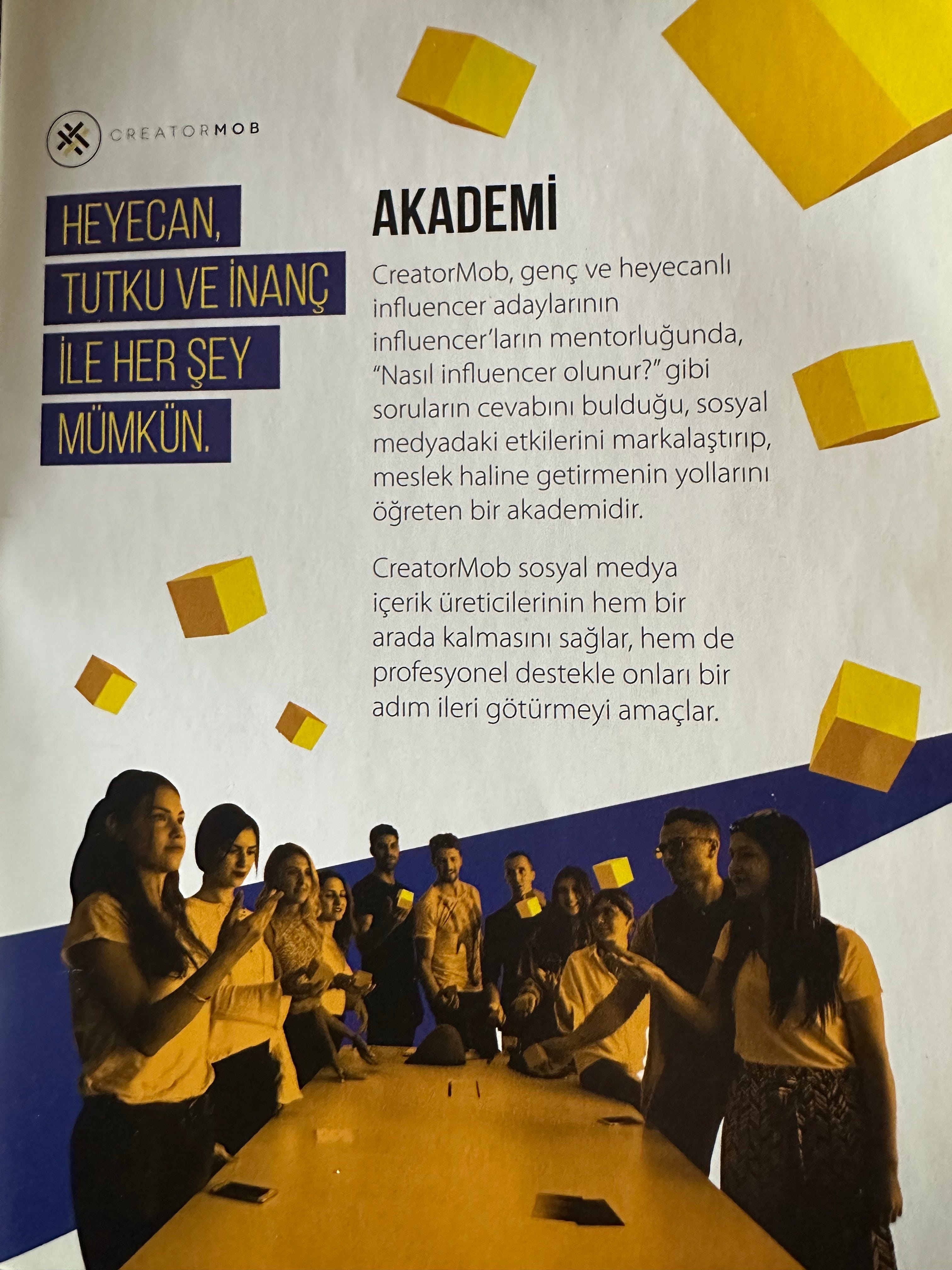
CreatorMob was a two-week bootcamp we ran out of our office for university students who wanted into the creator economy before there was a name for it.
Applicants were accepted into a hands-on program where micro-influencers became instructors and live campaigns became coursework.
We weren’t training users.
We were training the supply side of the market.
Our first “office” was a glass-walled corner with folding tables.
No budgets. No playbooks. Everything was built in real time.
When campaigns worked, they became templates.
When they broke, they became curricula.
We Trained Both Sides of the Market
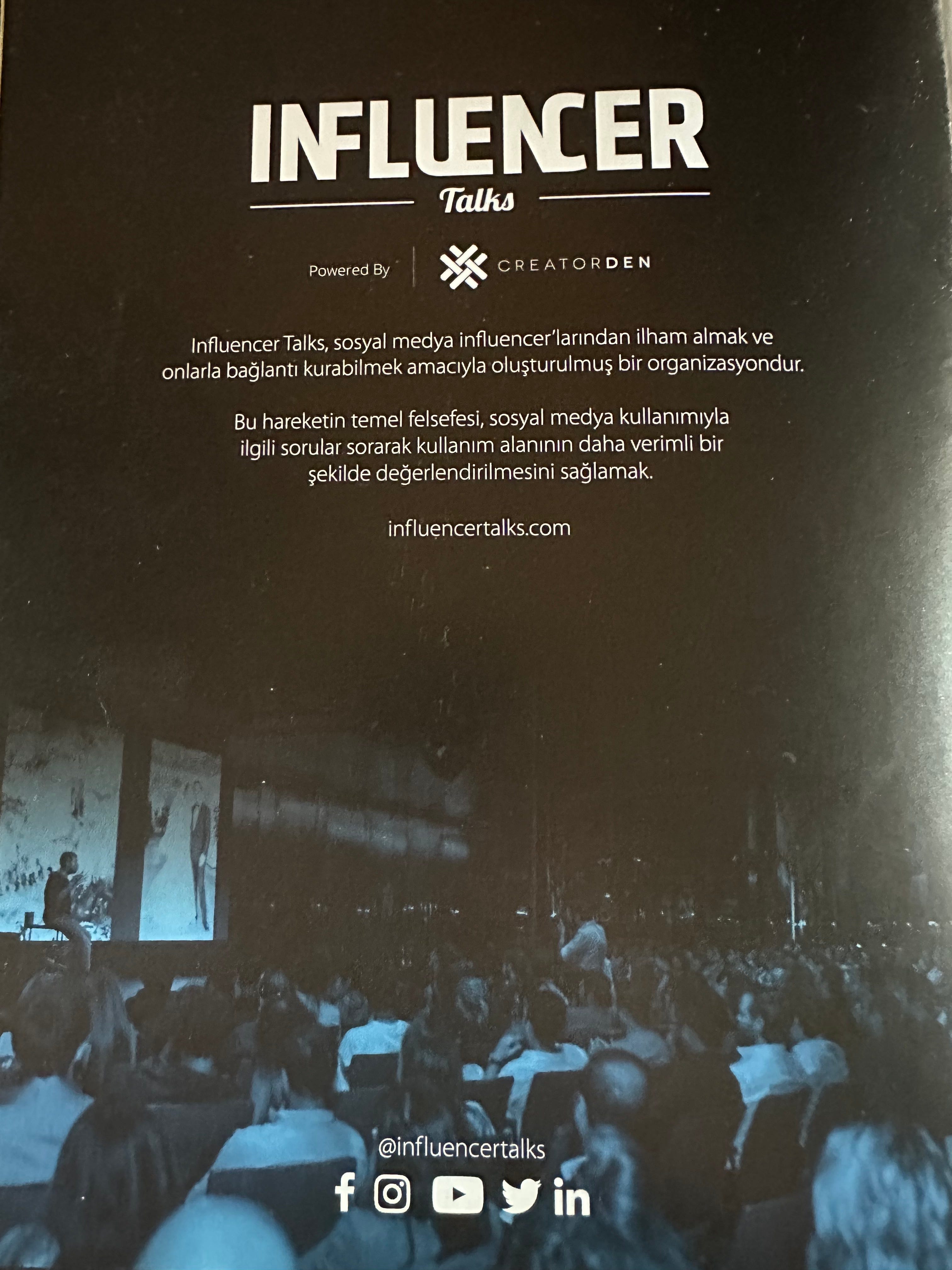
We weren’t just training creators.
We were training the market.
Influencer Talks was the event series that brought brands, agencies, and micro-influencers into the same room before “creator economy” was a planning line. We used it to teach strategy, pricing, and measurement long before anyone had formal budgets for the channel.
Influencer Talks Istanbul (2016) - The first event
We Built Media Before We Bought Reach

We printed a physical magazine and mailed it to 250+ agencies - not as promotion, but as positioning.
By the time brands asked about influencer marketing, there was already one name in the room.
CreatorDen.
We weren’t trying to generate awareness.
We were establishing default.
DENMAG wasn’t about readership.
It was about infiltration - placing CreatorDen inside the inboxes, meetings, and mental models of the people who controlled spend.
Media wasn’t a brand asset.
It was territory.
DENMAG Q1 2017 - Influencer Marketing and the Future of Digital Growth
Categories Aren’t Proven
They’re Programmed
Clay didn’t wait for job boards.
We didn’t wait for budget line-items.
We both did the same thing from different angles:
Educated before monetizing.
Conditioned behavior before selling tools.
Built before consensus.
Education is not a growth channel.
It’s market architecture.
Win the Edge of the Curve
Clay didn’t start with enterprises.
They started with operators who felt the pain first.
GTM engineers before CROs.
Practitioners before committees.
CreatorDen did the same:
Micro-influencers before celebrities.
The pattern is universal.
Categories don’t emerge by convincing everyone.
They emerge by converting early believers into reference points.
Win the edges.
The middle always follows.
Documentation Is Strategy
Clay didn’t keep strategy private.
They shipped it.
Bruno wrote in public.
Everett taught in public.
Playbooks weren’t hidden.
They were used as weapons.
CreatorDen made the same move through press, events, and convening.
We didn’t just publish - we mailed DENMAG to 250+ agencies by hand, with handwritten notes, so by the time brands started asking, their agencies were already selling CreatorDen for us.
If your strategy doesn’t survive exposure, it isn’t strategy.
It’s posture.
Validation Comes Last
Not first.
At CreatorDen:
Google acquired Famebit
Global budgets exploded
Turkey followed
The category arrived
At Clay:
Job titles appeared
Bootcamps formed
Partners emerged
The profession stabilized
Only then did valuation show up.
This is the real order of operations:
Language → Education → Infrastructure → Ecosystem → Valuation
Everyone else tries to reverse it.
The Truth Most Founders Never Internalize
You don’t scale by out-marketing competitors.
You scale by designing a market that requires you.
Features compete.
Categories monopolize.
What Category Leaders Actually Build
They don’t ship features. They ship gravity.
They don’t chase demand. They reprogram it.
They don’t sell tools. They train markets.
They don’t rent audiences. They own language.
They don’t optimize funnels. They recode behavior.
They don’t build startups. They build defaults.
They don’t grow companies. They reorganize industries around themselves.
If You Want Category Leadership
Build gravity.
That means:
Name something the market can’t yet describe
Train people before you sell software
Publish thinking before you buy traffic
Build ecosystems, not integrations
Design the profession before the product
Clay didn’t win because they were louder.
They won because they built the center of the map.
CreatorDen didn’t scale because we rode a wave.
We built the rails the wave ran on.
Final Command
If your strategy doesn’t change how your buyer thinks about their job, you’re not building a category.
You’re shipping features.
So build in this order:
Name the role the market can’t yet articulate
Build the school before you sell the tool
Publish the playbook before you buy traffic
Design career gravity before you chase pipeline
Instrument proof so success teaches for you
Markets don’t emerge. They’re engineered.
You don’t launch categories. You design them.